email from Nathan: 33 (xCoAx)

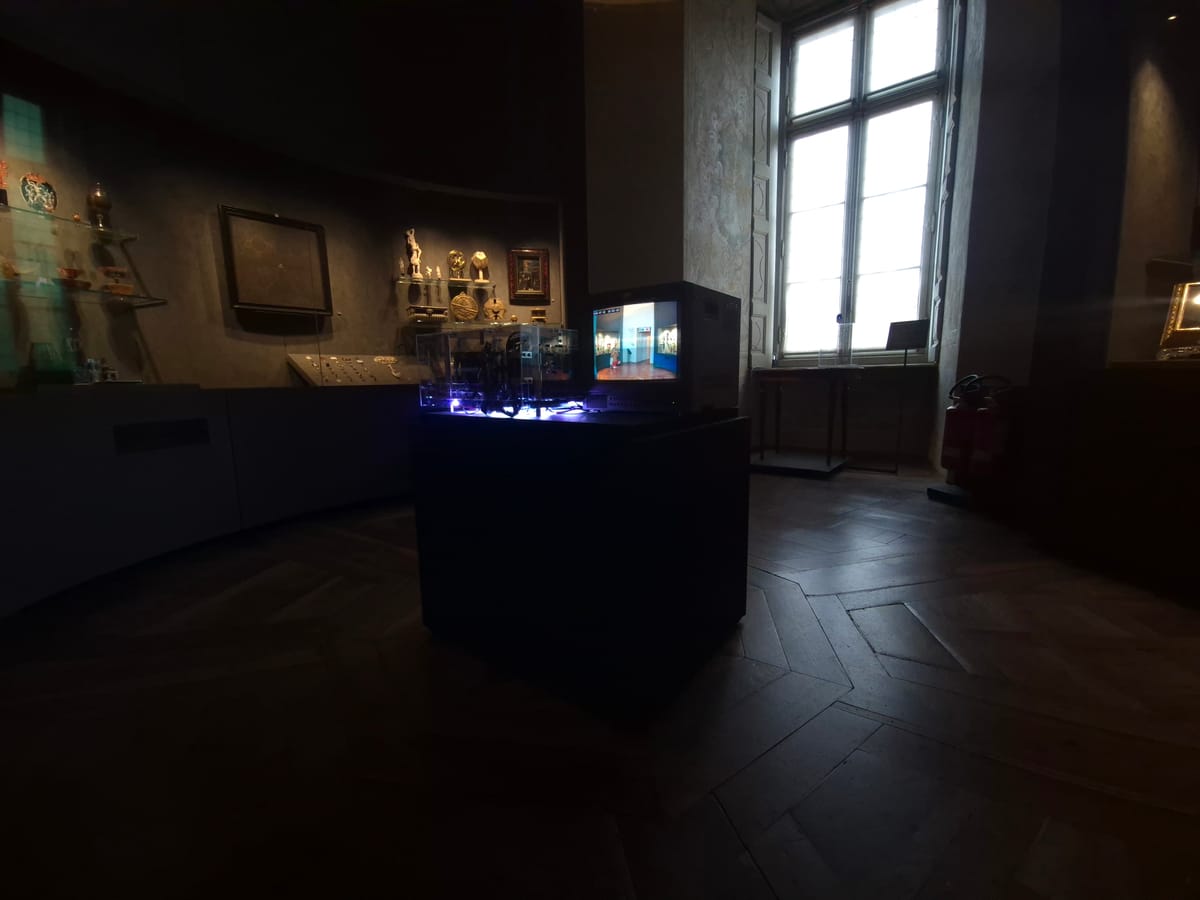
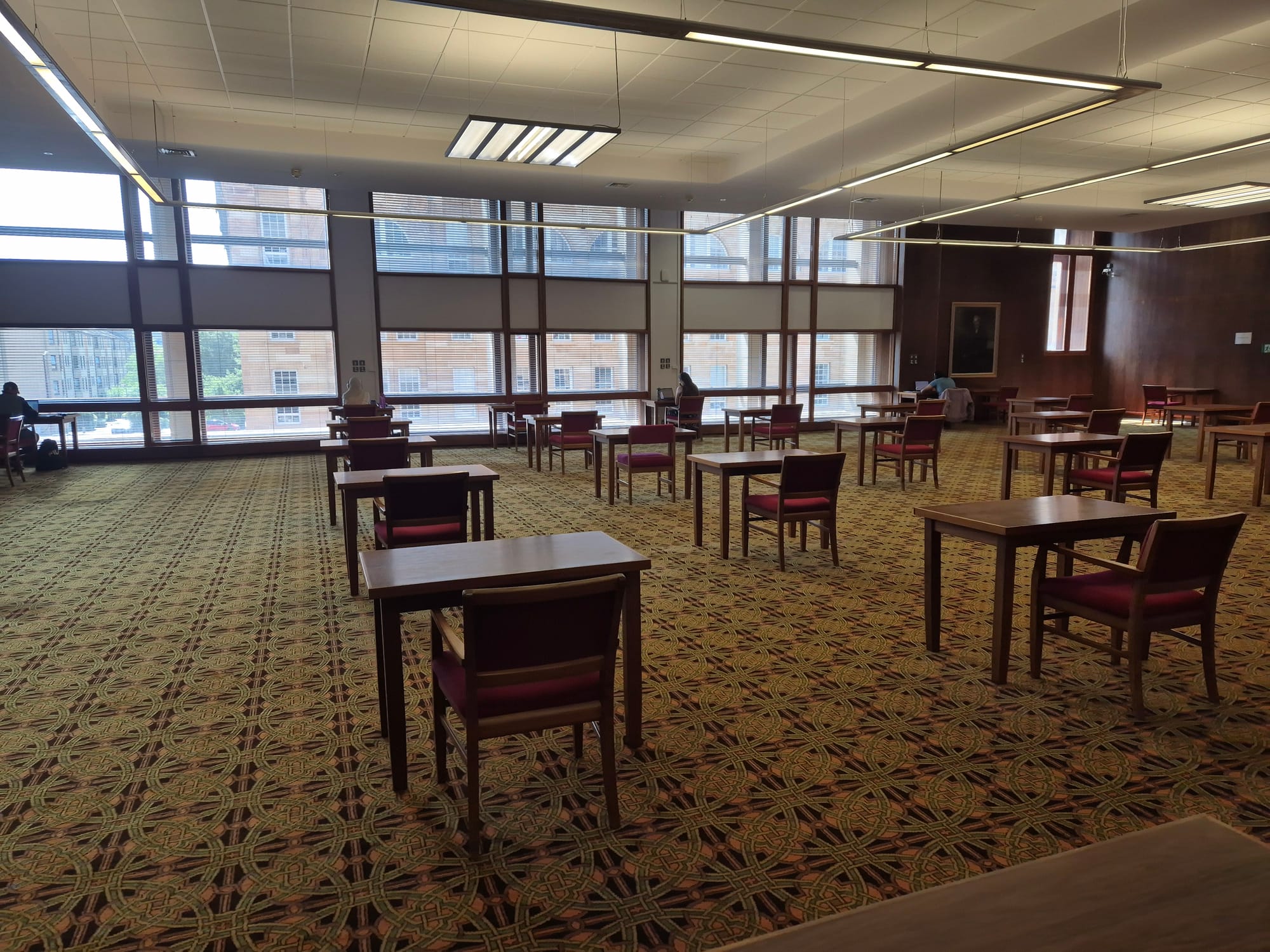
I'm just back from attending and exhibiting at xCoAx 2026 in boiling hot heatwave-assaulted Torino! It's currently 26° in Glasgow and I've never felt more appreciation for the weather in Scotland. This email is brought to you courtesy of Baillie's Reading Room in the Mitchell Library, an outrageously surreptitious free study space in the city centre, my favourite place to write, and home to an array of good carpets.
What's up
I'm bringing you the personal updates right off the bat so that if you don't fancy the art and computation chat below but just want to know that I'm alive and well and busy then I can confirm that I'm alive and well and busy and you can go back to your preferred activity. Shockingly, it's been a year since I last wrote to you! If you didn't see or hear from me at all from January to May this year, it's because I was deeply (deeply) buried in building two big projects, both of which I'm really proud of.
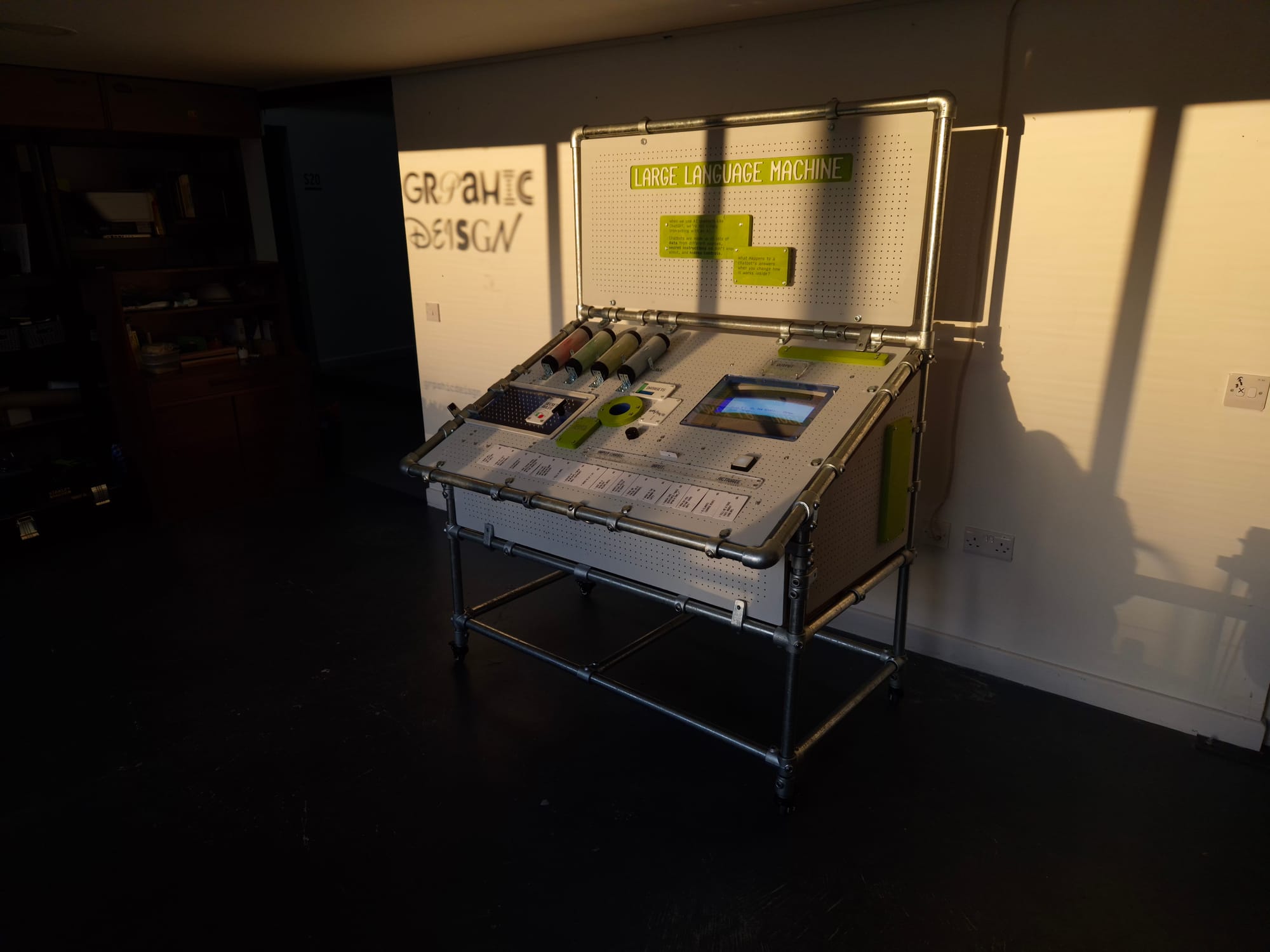
I held an artist residency at Heriot-Watt University, working with researchers and the university's engagement team on strategies to encourage young audiences towards tech literacy driven by a cognitive and critical approach. This is work that deserves a writeup of its own so I'll not dive in here, except to say that the project culminated in the university commissioning an interactive installation piece which I've called Large Language Machine. In brief, the machine explores how AI chatbots create an abstraction layer between the user and an AI model, and lets users (de)construct their own chatbot through a physical interface, plugging in different datasets and system prompts to change the outcomes. Click through to find out more, or hold out and I'll drop it in your inbox in a bit with some details on how I built and coded the work. I've never produced physical installation work on this scale before and there were a lot of fun things to learn about CNC machining and Interclamp scaffold tubing! Large Language Machine will next be on display at the V&A South Kensington for Digital Design Weekend in September.
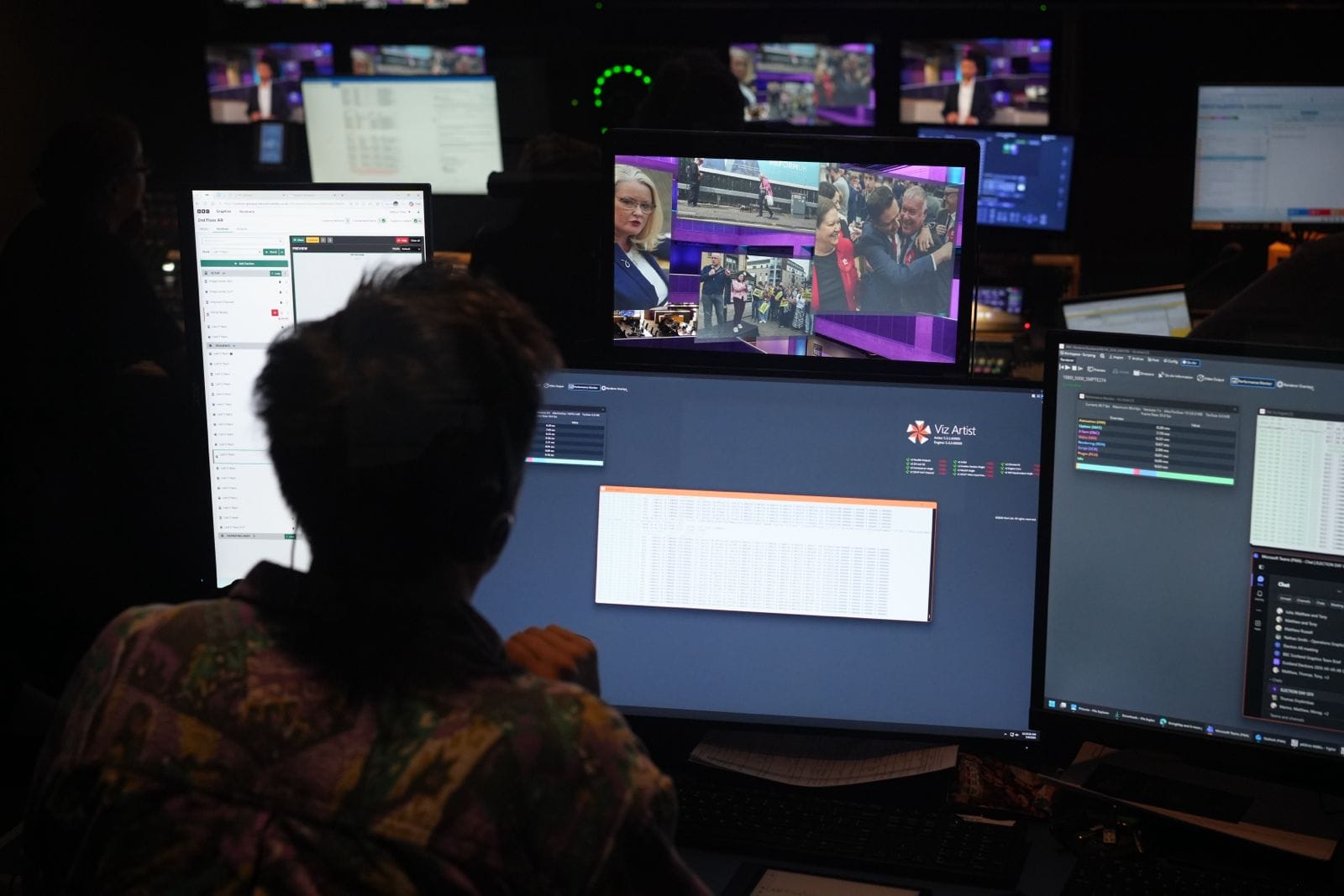
At the same time (!) I was at BBC Scotland building real-time data-fed 3D graphics for their coverage of the 2026 Scottish Parliamentary Election. This was an extremely intense and also wildly rewarding project, being embedded in a tiny team (3 of us!) and building a library of elements that translate the BBC's election visual language into 3D space and blend into the concrete, sandstone and metallic physicality of the Pacific Quay BBC studios. All of this then needed to be developed into a seamless blend of augmented reality and green-screen virtual studio graphics through lots of Vizrt, Blender and VBScript, and coded to plug in to live data streams and dynamically update throughout what was in the end a 14-hour continuous live broadcast.
If you still haven't seen or heard from me this year, it's because I've been gradually recovering from the close shave with total burnout that followed. I've been doing summer activities, I went to see Kraftwerk, I went to see the B-52s, I caught nearly everything on show at Glasgow International (I have a lot of thoughts, none of them for sharing here), I went to Black Lights in Blackpool, stopped by the rainiest Kelburn Garden Party I've ever seen, and I took a quick trip to Toronto (for the first time! It was very good).

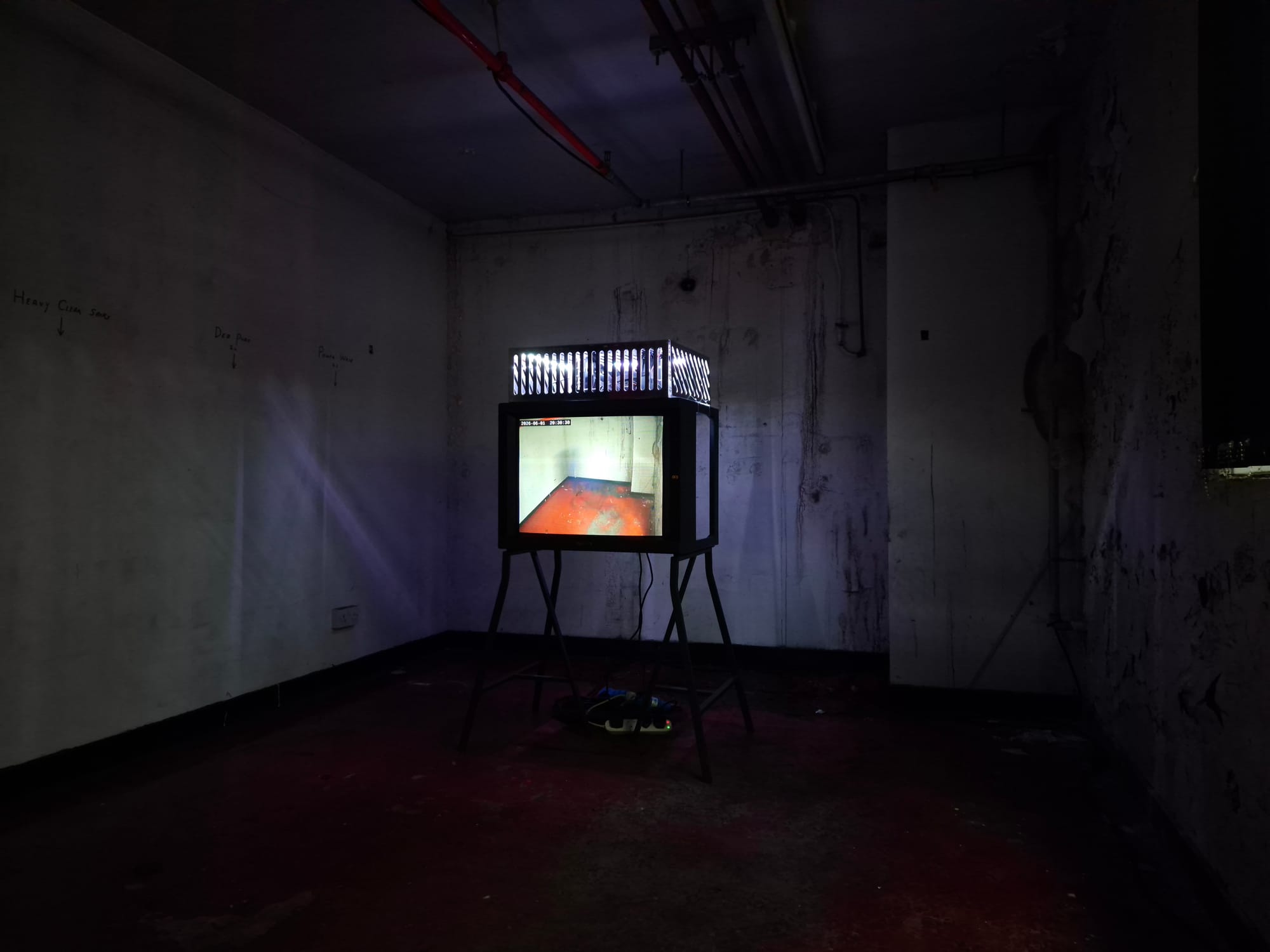
I was really excited in June to exhibit In Translucence at Hidden Door Festival in Edinburgh, and it was a great experience customising the work for a derelict industrial space. To jog your memory, the installation is a machine attempting to erase itself from view: it features a large CRT display and computing components with a remote camera pointed at the artwork, and on the display is the feed from the camera, except that the exhibit itself seems to have been erased. I developed the work last year (and was the subject of my last email to you), I previewed it in Glasgow around a year ago and it premiered at Peckham Digital in October.
xCoAx
Which leads me to xCoAx, the 14th Conference on Computation, Communication Aesthetics and X. I stopped by last year's exhibition in Dundee and was really impressed by the quality of the work and discourse. I'm really grateful to the committee for accepting In Translucence to exhibit in Torino this year, and for publishing a paper I wrote about the work in the conference proceedings.
I gave a brief talk covering the work and a few of its core ideas, which I've included below with a transcript. If you have any questions or points to add please get in touch!
Transcript: Nathan Smith - In Translucence (xCoAx 2026)
I want to frame my work a little bit with my practice: the main focus of my work is on exploring and unlocking agency for users, so I hope to make revelatory work, which questions the orthodoxy of tech and encourages audiences who are disenfranchised to wrestle for agency. I don't really like simplifying technology, and I'm definitely not into rejecting it, but I always want to peel back the layers and show what's going on inside.
So one of the speculative provocations that I've been looking at recently is the idea of technology vanishing. We live in a world where technology fills news headlines and dominates conversations, but what happens when that's not the case, when technology disappears? Not so much looking at a 'post-technology' future, but rather, what does it look like when today's tech doesn't feel like technology?
One fun, kind of easy example for my research was looking at the electric light, an advanced technology of its time. Over about a century, we gradually dropped the word 'electric' off of it, and its technological method of production is no longer eponymous. So the 'electric light' gradually just becomes generic 'light,' and we can sort of anecdotally chart its progression then from that advanced technology to a pedestrian utility. And then, arguably, the electric light is no longer even considered 'technology' to most people, and new 'advanced' technologies become prepended or appended.
And then we can speculate that over time, perhaps new advanced technologies are no longer considered advanced, and they, in a sense, disappear. So I wanted a sort of shortcut term for how I could describe this quality, the potential the technology holds to be looked through, rather than looked at. So I called this 'Translucence.'
If you're a linguist, you might describe this process as 'semantic drift' or 'semantic shift,' which is where you chart changes in terminology across time, sometimes so drastic that words take on opposite meanings. But we need to sort of look beyond this, and we have to see the drift as effect, not cause. It's complicated by post-modernist lens, where we know that semantics are a complex element in the production of meaning, the cycle of production and consumption. How we perceive an object alters how we use it, and then in turn how it's designed, and again how we perceive it and use it.
And this is very significant for advanced technologies such as AI, because what might it mean for AI image generation, or AI journalism, or 'the AI overview' if these things just become 'images,' 'journalism' or 'search?' Or in other words: what happens when all the sparkle emoji and multicolour gradients go away but the technology persists regardless?
Generative AI is really fun one to consider here because it holds its weird potential where generative AI can be used to conceal the use of generative AI, in a sort of meta-translucence. And that's what my installation work [In Translucence] demonstrates: it's a machine trying to erase itself from view.
The critical moment of this work is when the viewer experiments with it and interrupts the process, because it causes glitches, and the glitch is the hinge to understanding the work; it sort of opens the door to grasping these ideas behind it. I love this quote from Betti Marenko from a paper a few years ago on computational glitch events where she defines a glitch as "the machine caught in the act of revealing itself."
So I hope that with In Translucence, and the experience of this artwork, catching the glitch and revealing what's happening with the machine explodes this idea for the work's audience. My ethos with this is that no technology is perfectly transparent, nor completely opaque, but like the displacement of light through an imperfect lens, it's not quite hidden, but not fully perceived. Translucence leaves glitchy and ghostly refractions of its presence.
Next up
- I spent three days at the conference jotting down notes of interesting thoughts and links to see nice work, and I'd love to share them but I've left my notes at home. I'll share them next time alongside some of the book, music, film recommendations I usually remember to include.
- As I mentioned earlier I'll be exhibiting Large Language Machine at the V&A in London in September. That's my only London trip in the foreseeable future so please get in touch if you'd like to meet up!
- I'm developing new work and enduring/enjoying the long processes of funding applications and otherwise enjoying summer as much as I can
- I'll be at Fata Morgana somewhere in France in early August
- I'll be at Field Maneuvers somewhere in England in late August
- I'm going to Mull this weekend
- It's my birthday on Tuesday
- I'm going to the gym after I hit send. Wish me luck it's been a few weeks